



Plastering wooden walls: methods for preparing the base and applying the mortar
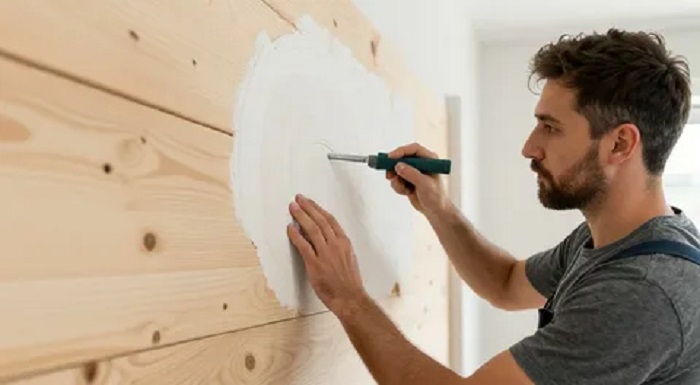
Plastering wooden walls helps level the surface, increase fire resistance, and improve thermal and sound insulation, but requires strict adherence to the technology. Wood is subject to movement due to humidity and temperature, so proper substrate preparation, creating a reliable bond, and choosing compounds that withstand deformation without cracking are key.
In practice, several methods are used: application over lath or metal/fiberglass mesh, lathing with reinforcement, and combined solutions for complex areas. It is important to monitor the wood’s moisture content, use primers and antiseptic treatments, and maintain the correct layer thickness and drying time—this will prolong the finish’s life and maintain its appearance. If necessary, you can rely on the experience of home renovation services in Calgary when selecting materials and sequencing work.
When is it acceptable to apply mortar to wood?
Applying plaster mortar directly to wood is only acceptable as part of a properly assembled system: the wood must be dry, moisture-stable, and not subject to active deformation. Mortar itself does not interact well with wood: different expansion coefficients and shrinkage/swelling with changes in humidity quickly lead to microcracks and delamination, so direct mortar-to-board/log contact almost always means a short service life.
Plastering wooden walls is practically justified when it is possible to create an intermediate layer that will hold the mortar and compensate for subfloor movements: for example, through laths, reinforcing mesh over sheathing, or sheet materials designed for plastering. Operating conditions are also important: the more stable the temperature and humidity in the room, the higher the chance that the coating will last without defects.
Limitations and Risks
The key limitation is the wood’s moisture content and its seasonal movement. If the wood is «green» or the house is still shrinking, the plaster layer will experience constant tensile and shear loads. The result is usually the same: a network of cracks, «bulging» when tapped, localized separations, and, at abutments, seam failures.
A separate risk is that plaster can reduce the vapor permeability of the structure and «lock» moisture in the wood if there are imperfections in the wall structure. This increases the likelihood of biological damage (mold, mildew) and accelerates the deterioration of the substrate. Therefore, it is unacceptable to cover wood with mortar layers without understanding where the moisture will go and without antiseptic/fireproofing where required by the design.
- Do not apply mortar to contaminated, resinous, dusty, or oil-based wood without proper preparation – adhesion will fail.
- You cannot rely on the strength of the plaster if the base is unstable: weak lath fastenings, thin boards, vibrations, impacts.
- It is undesirable to use heavy cement mortars on mobile wooden surfaces: they are more rigid and more likely to crack when deformed.
Choosing Rooms: Where to Use and Where to Avoid
The safest areas for plastering wooden walls are dry and heated spaces with a relatively stable microclimate: rooms, hallways, and offices. It’s easier to ensure constant ventilation and predictable humidity there, which means fewer swelling and shrinkage cycles that damage the layer.
In rooms with high humidity (bathrooms, showers, laundry rooms, kitchens without an effective exhaust system), plastering over wood is only permissible with strict adherence to a moisture management system: a separating layer, moisture-resistant materials, well-designed ventilation, and the absence of condensation traps. If you’re unsure about proper ventilation and the wood’s ability to withstand moisture, it’s best to choose solutions that don’t expose the wood to a «wet» mineral layer.
- Suitable: Dry living rooms, insulated and heated areas with even humidity levels.
- Use with caution: Kitchens and hallways – with adequate ventilation and stable heating.
- Mostly undesirable: Baths, saunas, unheated summer cottages, basements, and areas with frequent condensation – the risk of wood delamination and moisture buildup is too high.
Hello!! My name is Jeanine
I love to eat, travel, and eat some more! I am married to the man of my dreams and have a beautiful little girl whose smiles can brighten anyone’s day!