




Commercial DTG printing across hoodie pockets, seams, and youth sizes: specialized platen selection guide
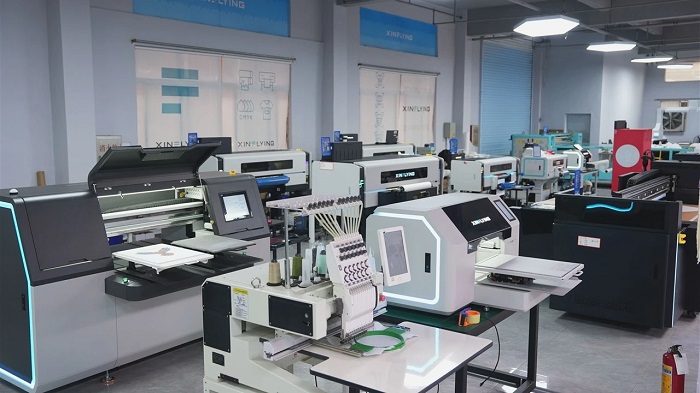
When commercial direct-to-garment (DTG) print shops expand beyond standard adult crew-neck T-shirts into zippered fleece hoodies, kangaroo-pocket sweatshirts, youth apparel, and long-sleeve streetwear, image sharpness and printhead safety depend on using a dedicated specialty platen that drops thick seams, zippers, and collar ribs below the active print plane.
Because industrial piezo printheads deliver their sharpest droplet placement within a tight two-to-three-millimetre throwing distance above the fabric, forcing an oversized or seam-heavy garment onto a standard flat adult platen forces the operator to raise the Z-axis carriage too high—causing blurry ink mist and risking expensive head strikes.
Why Seam Elevation Distorts Droplet Accuracy in Commercial DTG

On a standard adult T-shirt platen, the entire chest area consists of a single uniform layer of jersey knit while the thicker collar rib, shoulder seams, and bottom hem hang cleanly over the four outer edges of the tray. The moment an operator loads a toddler T-shirt, a pouch-pocket hoodie, or a zippered sweatshirt onto that same large adult tray, the geometry breaks down:
- Forced Z-axis elevation over thick seams: If a hoodie’s triple-stitched kangaroo pocket seam sits on the bottom edge of a large adult platen, the optical obstacle sensor stops the table at the height of the thick seam—leaving the actual chest print zone sitting five to七 millimetres below the printheads.
- Bidirectional ink-mist haloing at excessive head gaps: Firing microscopic water-based pigment droplets across an oversized air gap allows air currents from the moving carriage to deflect droplets sideways, creating fuzzy text edges and ghosted white outlines.
- Fabric tenting around zippers and polo plackets: A metal zipper or raised three-button polo placket creates a ridge down the centre of a flat platen, holding the adjacent cotton fabric up like a tent that bounces under carriage motion.
Specialty Platen Selection Matrix for Commercial DTG Production
Equipping a DTG station with quick-change modular platens allows operators to swap trays in seconds and keep every garment style within the optimal close-gap printing window.
| Garment Style & Placement | Recommended DTG Platen Type | How the Platen Geometry Protects Print Quality | Critical Loading Rule |
|---|---|---|---|
| Adult unisex & oversized tees (S–4XL chest/back) | Standard & wide flat adult platens with perimeter tuck frame | Drops collar rib and shoulder seams over the top edge while holding single-layer cotton taut | Smooth fabric from centre outward without over-stretching the jersey rib |
| Youth, toddler, & slim women’s fitted tees | Narrow youth / small-chest platen | Allows narrow side seams and small armholes to drape off the platen edges instead of bunching on top | Never stretch a narrow youth shirt forcibly across an adult platen—it will snap back and distort the graphic |
| Pullover hoodies (chest print above kangaroo pocket) | Shorter landscape or medium chest platen | Stops above the thick kangaroo pocket seam so the pocket hangs below the lower platen lip | Verify that thick hood drawstrings are tucked completely under the top platen bracket |
| Full-zip hoodies & polo button plackets | Grooved / split centre-channel platen (or recessed foam insert) | Centre slot lets the zipper teeth or button placket sink flush below the left and right cotton print panels | Align zipper straight down the centre trough and lock the top hoop firmly |
| Long sleeves, pant legs, & neck labels | Dedicated dual-sleeve platen or small tag platen | Isolates narrow tubular sleeves away from thick cuff and armpit seams | Batch all sleeve placements together at the end of a torso run to minimise platen swaps |
Maintaining Platen Grip and Tuck-Frame Tension Without Stretching Cotton
Whether an operator uses a vacuum/sticky platen surface or a mechanical perimeter hoop frame, how the cotton blank is secured to the tray directly affects white-to-colour registration. On dark cotton garments, the wet pre-treatment and heavy white ink pass add moisture weight to the fibres; if the shirt is sitting loosely on an un-tacked platen, the cotton knit can swell and ripple slightly before the CMYK colour pass arrives.
To prevent mid-print fabric swelling without deforming the garment, shops should keep a light, lint-free water-based platen adhesive tack on flat trays (or use matched snap-on perimeter tuck frames) and press the garment flat immediately before loading. Operators should lay the shirt onto the platen in its relaxed natural state and smooth it gently with open palms—never pulling the fabric tight like a drumhead, which causes circular logos to ovalise as soon as the shirt is unloaded.
Selecting Industrial DTG Hardware Designed for Fast Modular Platen Changes
For contract decorators and apparel factories handling diverse daily orders across tees, fleece hoodies, and youth sizes, hardware built around heavy-duty Z-axis elevation and interchangeable platen mounts keeps changeover time minimal. Production managers evaluating industrial platforms such as the XINFLYING XF-DTG-380—or comparing dual-platen systems like the XF-DTG-20 and compact XF-DTG-10 models—can review the complete specifications across XINFLYING direct-to-garment printers to match platen dimensions and carriage clearance controls to their apparel catalogue.
By pairing an industrial platform like the XINFLYING XF-DTG-380 with a structured set of youth, hoodie, and grooved specialty platens, commercial print shops can keep printhead throwing distance tight and deliver razor-sharp graphics across every cotton garment construction.
Hello!! My name is Jeanine
I love to eat, travel, and eat some more! I am married to the man of my dreams and have a beautiful little girl whose smiles can brighten anyone’s day!